

Hamnet Review
Growing up, my dad exposed me to a wide range of movies. We would watch movies like Juno, Saw, or The Assassination of Jesse James by the Coward Robert Ford, whether at my local theater, Blockbuster Video, or Netflix when it was still a mail-order rental service.
During my high school years, I watched as multiple sclerosis ate away at my dad until he ultimately passed away in June of 2014, less than two weeks after Father’s Day. After my dad died, I spent years processing my grief. I still don’t understand why I grieved for as long as I did. My grief was a result of how much I loved my dad. He saw all my interests and made sure he at least tried to support or understand them in ways my friends didn't. The grief I felt over my dad’s death was the reason I could appreciate Hamnet. It’s an exploration of how grief touches everyone and everything the deceased affected.
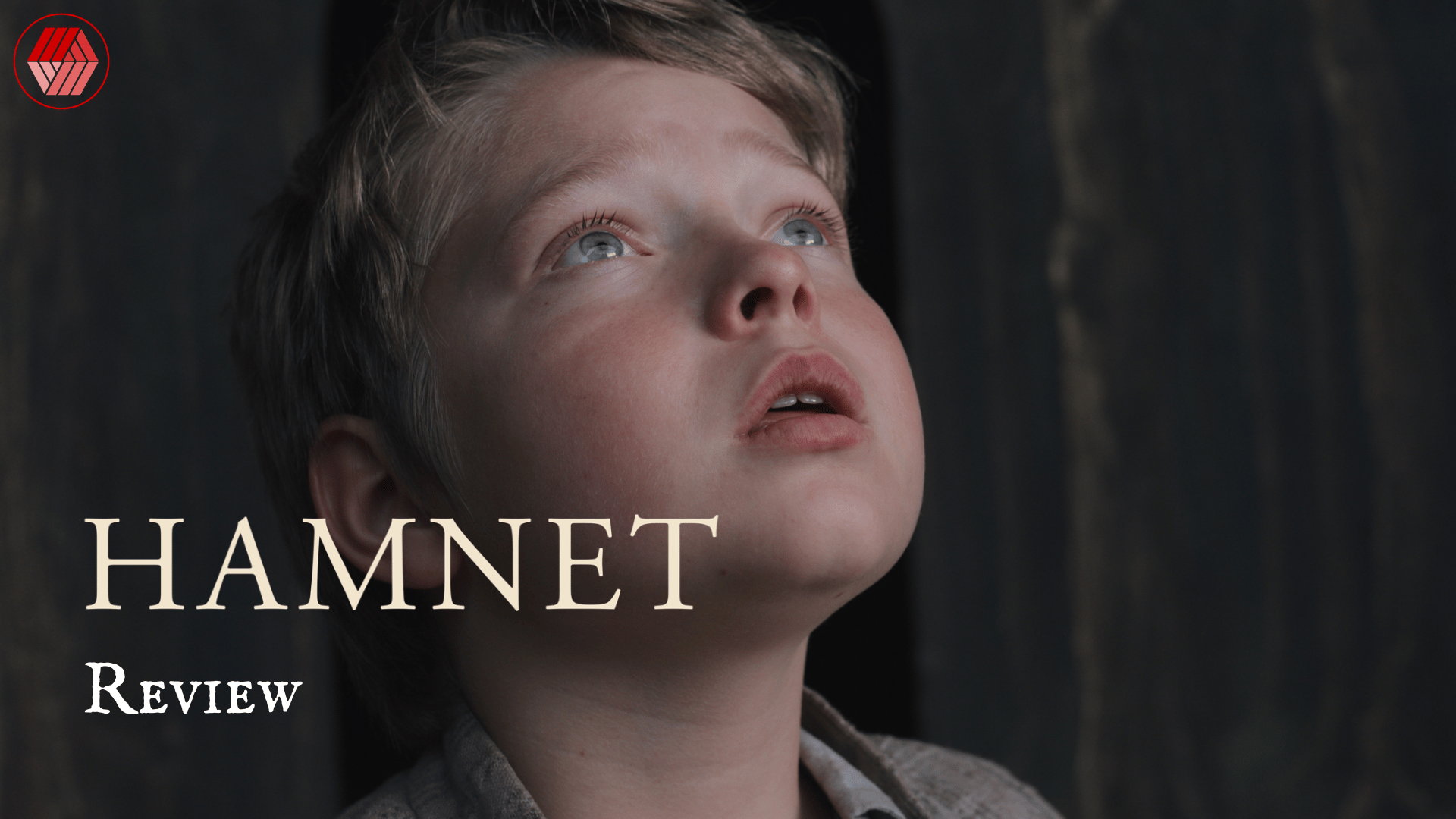
Story
Based on Maggie O’Farrell’s New York Times bestselling novel, Hamnet explores love, grief, and the creation of William Shakespeare’s tragedy Hamlet. Now, I can feel some of you about to close the tab because of the traumatic experience you had while reading the play in school. Hold on just a second and bear with me.
As much as the synopsis above makes the film seem like Hamnet is going to depend on your willingness to feign interest in Shakespeare’s prose, I can promise you that the movie is not concerned with that aspect in the slightest. Sure, the film features William Shakespeare as one of its characters and references his other works, such as Romeo & Juliet, The Tragedy of Macbeth, Twelfth Night, King John, and The Taming of the Shrew. However, the film deliberately turns away from being about Shakespeare.
If it’s unclear what I mean, here’s an example. For starters, William Shakespeare isn’t referred to in full until the last act of the film. He’s simply “Will”. That, and much of the film’s runtime isn’t devoted to Will. Instead, the film focuses on his wife, Agnes Hathaway, and her emotional journey after losing their son, Hamnet.
So, if the Shakespeare of it all was keeping you away from Hamnet, I’m pleased to report that is not the case. Despite featuring many references to his works and clearly wanting credit for those references, Hamnet isn’t as much concerned with how much you know about Shakespeare, but instead your capacity to experience love, grief, and the intertwining of the two emotions after the death of a son.
Performances
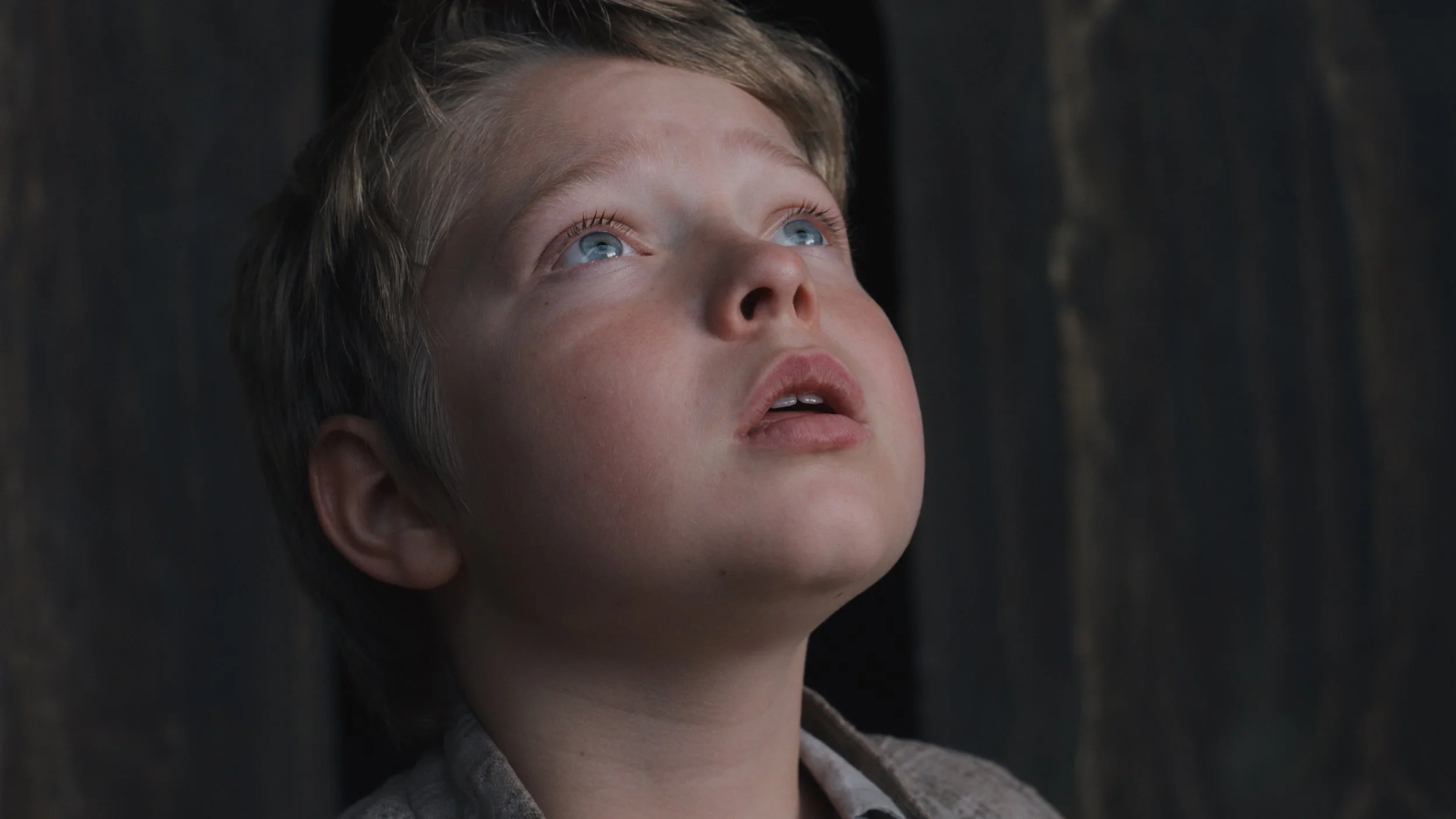
Speaking of the death of a son, Jacobi Jupe plays the titular Hamnet and is inarguably the emotional core of the film. While Jupe is in the film for only a short time, he makes a profound impact. Every scene he’s in shows his capacity for bravery, selflessness, joy, and the immense emotional turmoil he feels from being separated from his father for much of his life. Some standout scenes are when Will tells Hamnet to “be brave”, only to be followed up by Hamnet crying over a splinter, or when Hamnet switches clothes with his sister Judith as a prank, or when he becomes one of the witches from The Tragedy of Macbeth. I could pull this thread apart endlessly, but I’ll save you the time. Jupe is incredibly capable of expressing a wide range of emotions, and they are all on display here. I do wonder if his brother, Noah, who plays Hamlet, had anything to do with how great an actor he is, given his lengthy resume, but either way, Jacobi Jupe has a bright future ahead of him, and I wish he were nominated for an Oscar.
While we’re on the topic of the Oscars, Jessie Buckley is an Oscar winner thanks to her performance as Agnes Hathaway. Like Jacobi, Buckley is given a wide palette of emotions to express throughout the film’s two-plus-hour runtime. When we first meet her, she is a shy woman who desperately wants to escape her family, whether that means retreating into the forest where her mom supposedly emerged or heading somewhere else with her trusty hawk. Then, when she meets Will, her entire demeanor shifts into that of childlike wonder. She’s excited about what life with Will looks like. Soon after, she is met with the harsh reality of raising children on her own and retreats into herself before re-emerging as the fun parent while Will is working in London, before Hamnet dies. It is here that we spend the most time, experiencing her deep sorrow for the loss of her only son, gasping for air, crying, and screaming wildly when it happens. Beyond that, Buckley is where the themes of grief come into play. She shuts the people she loves the most out of her life, never asks for help even when she’s suffering, and is angry at the world for taking her son from her. So, if Jacobi is the emotional core, to continue the metaphor, Buckley is the film’s beating heart.
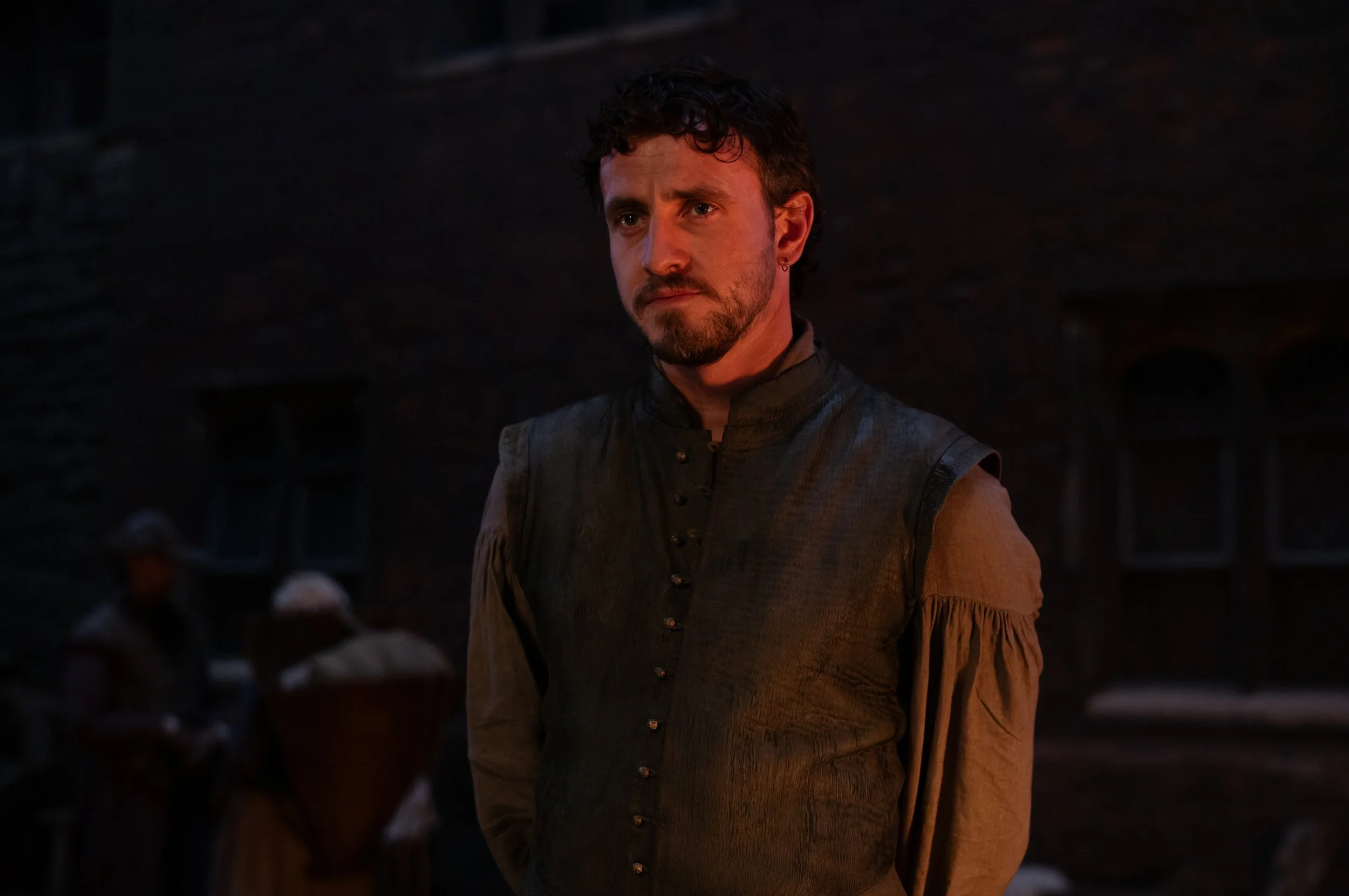
The brain of the operation is Paul Mescal’s Will. Okay, maybe the metaphor needs to die, but you get my point. Will’s presence in Hamnet is one of incredible restraint. He is a physically and emotionally distant man. He showcases his anxious and whimsical side when courting Agnes, but otherwise bottles his emotions up until he’s up late at night writing a play while the world sleeps. The only times the audience gets to see his emotions are some of the highlights of Hamnet, whether it’s his “to be or not to be” speech late at night at a London pier, his late-night frustration after trying to write a play but being too drunk to continue, his desire not to be anything like his father, or the final moments where Agnes gets to feel Will’s grief on full display at The Globe. Regardless, it’s a masterclass in acting, and it is a shame he’s not nominated for an Oscar.
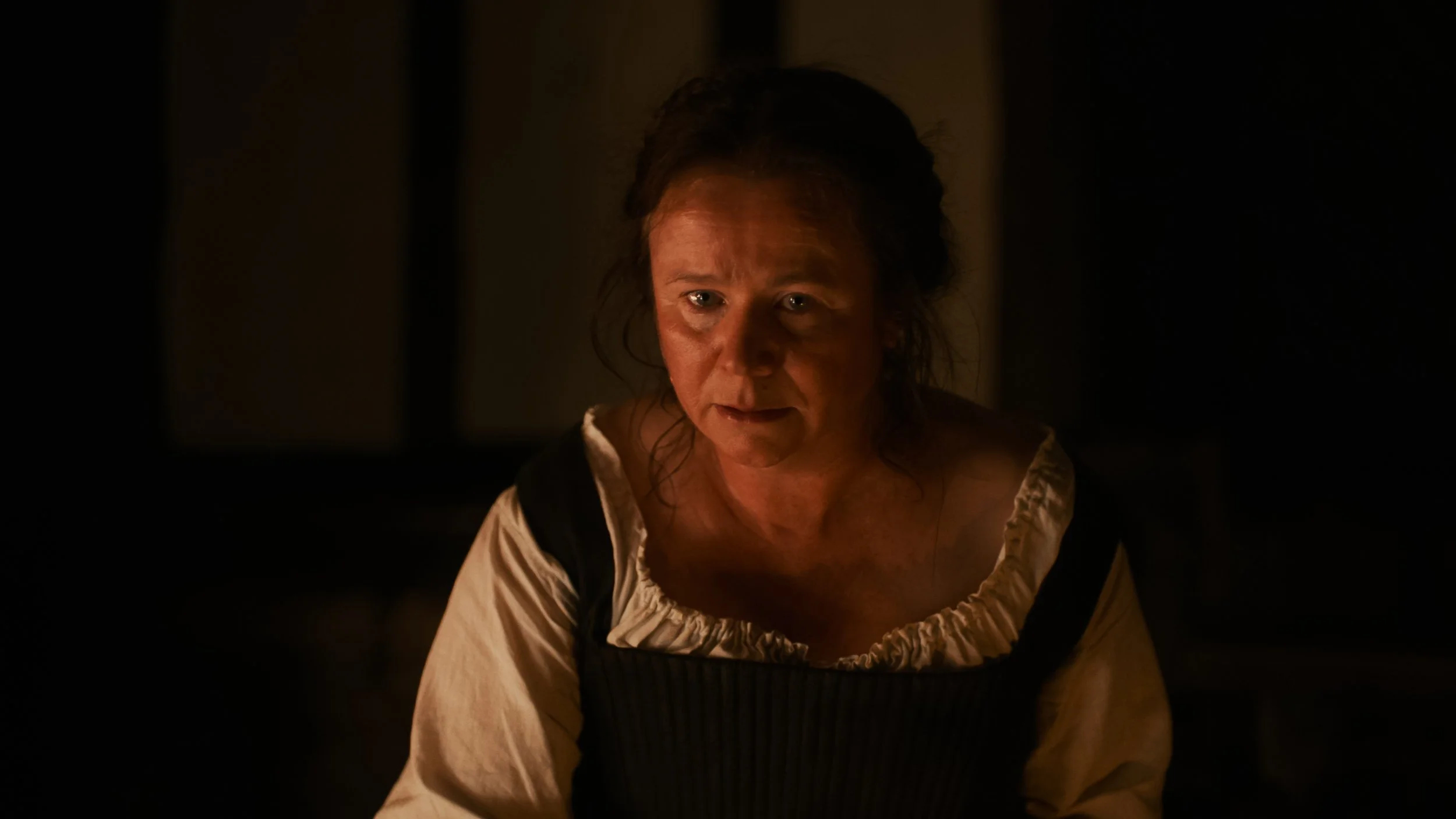
Two featured players that I want to mention here are Emily Watson, who plays Mary Shakespeare, as well as Joe Alwyn, who plays Bartholomew Hathaway. Watson isn’t given much material, but she gives an incredibly vulnerable performance here. At the beginning of the film, the audience sees her as the typical mother, likely having been Will’s father's obedient servant for much of their marriage. However, a key scene in which she opens up to Agnes about her struggles with raising and losing her children softens the audience toward her. She becomes instantly relatable and gets a ton of sympathy in that one moment. Better yet, Watson plays the scene so gently as not to overplay the quiet emotional turmoil she’s been feeling for what I assume to be decades. Really great work here.
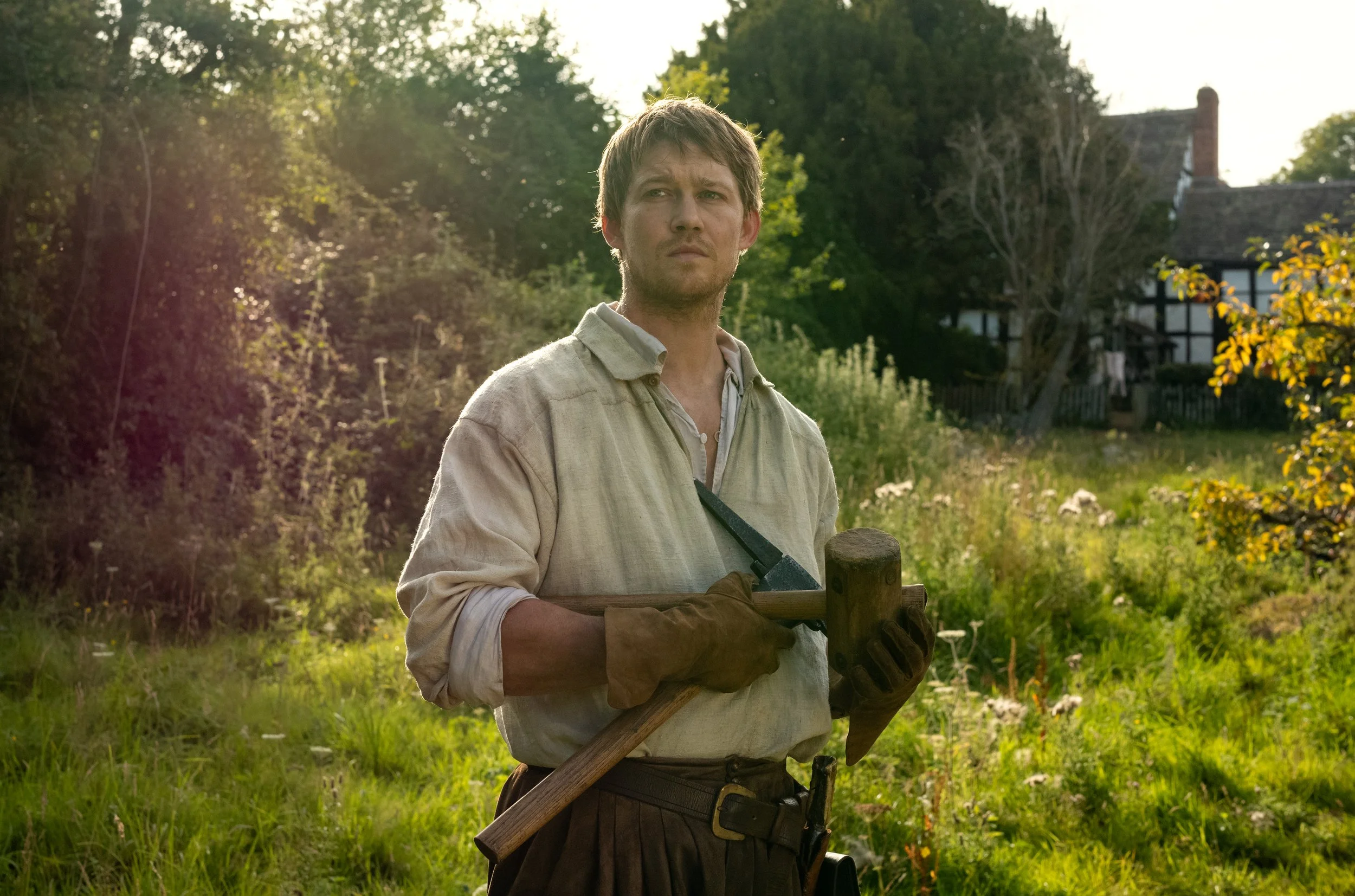
As for Alwyn, he seems to be sleepwalking through this role, mumbling the words in a dreary tone and not really speaking to the meaning behind the words. He’s horribly miscast here.
Direction
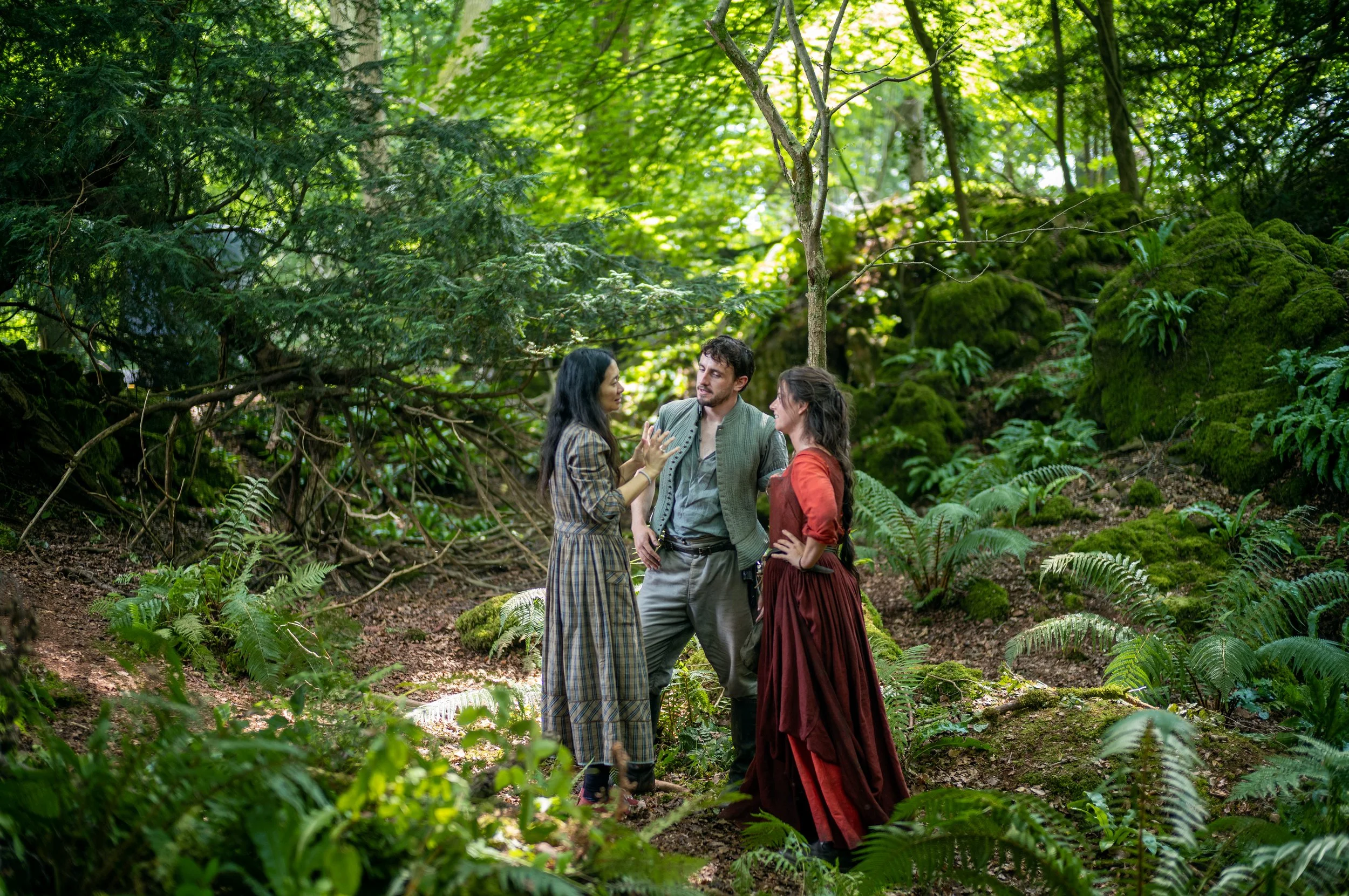
I’ve been following Chloé Zhao’s career since her 2017 film, The Rider. That film was a lot like Hamnet. It uses nature to tell the real-life story of Brady Jandreau, a rodeo rider sidelined after a gruesome injury and forced to relearn how to move forward with his life. Her next feature, Nomadland, is based on the book of the same name by Jessica Bruder. Unlike the book, which follows older Americans like Linda May who work for Amazon through its Amazon Camperforce program, the film focuses on Fern, an older American who lives in a van and works odd jobs as she travels the United States. You can find my review here, but it’s a very good movie. What these two movies had in common was a love for Americans whose stories often went untold or underappreciated, mixed with a love for nature.
However, when Zhao took the directing job for Eternals, a lot changed in her directing style; that is, it didn’t feel like Zhao directed a single scene within its two-and-a-half-hour runtime. Gone was the appreciation for the stories that went untold and the natural world, replaced by a weird story set in the Marvel Cinematic Universe about a team of ancient aliens that had existed on Earth for millennia. As one might imagine, the film received poor reviews, and the Eternals have not been featured in any subsequent Marvel Studios films or TV shows since its release.
After Eternals, I wasn’t sure Zhao could go back to making naturalistic indie films, but Hamnet proved me wrong. Where Eternals featured a fictionalized team of super aliens tasked with guiding humanity (whatever that means), Hamnet features a fictionalized version of a real person and story to explore how the natural world and modern society (well, as modern as 16th-century Stratford can be) intersect. Furthermore, Hamnet employs a more naturalistic, locked-off camera, a sense of patience that lets scenes reach their natural end, and a reverence for nature.
Writing
O'Farrell's fingerprints are all over the screenplay, and that’s mostly a strength. The screenplay reflects how both Agnes and Will’s grieving processes work, which is the film’s most powerful idea, and it lands. The moment Agnes connects the dots on what she’s watching is the film’s best scene, and it earns the emotions it draws from the audience.
Where the script falters is in its overt Shakespeare references. Most of the references feel like the script reminding the audience who Will is, rather than serving the story. The one exception I found is when Will recites the “to be or not to be” speech, which earns its place because it showcases how Will is processing his grief.
What the script doesn’t fully earn is the connective tissue. A page Agnes writes early in the film, which feels loaded with significance, receives no payoff. Also, the timeline jumps leave some emotional turns feeling assumed rather than demonstrated. You’re asked to accept certain character developments on faith rather than evidence.
“To live with our hearts open. To shut it not in the dark, but to turn it to the sun.”
Music
Max Richter’s score is mostly a strength of the film. For the majority of the film, he either uses subtle compositions of choirs singing or a simple string orchestra to accent whatever’s going on in a scene, especially when Agnes is in nature. However, there are moments, whether it be when “On the Nature of Daylight” plays or when we get to see the full-scale production of Hamlet, when Richter overpowers the audience with the score to elicit an emotional response. In the example of “On the Nature of Daylight”, Richter is trying to get the audience to cry as the characters onscreen are. It’s a noble effort, but these moments made me miss the earlier Richter compositions. At least there I could connect the dots instead of being hit over the head with the emotions I was supposed to feel.
Cinematography
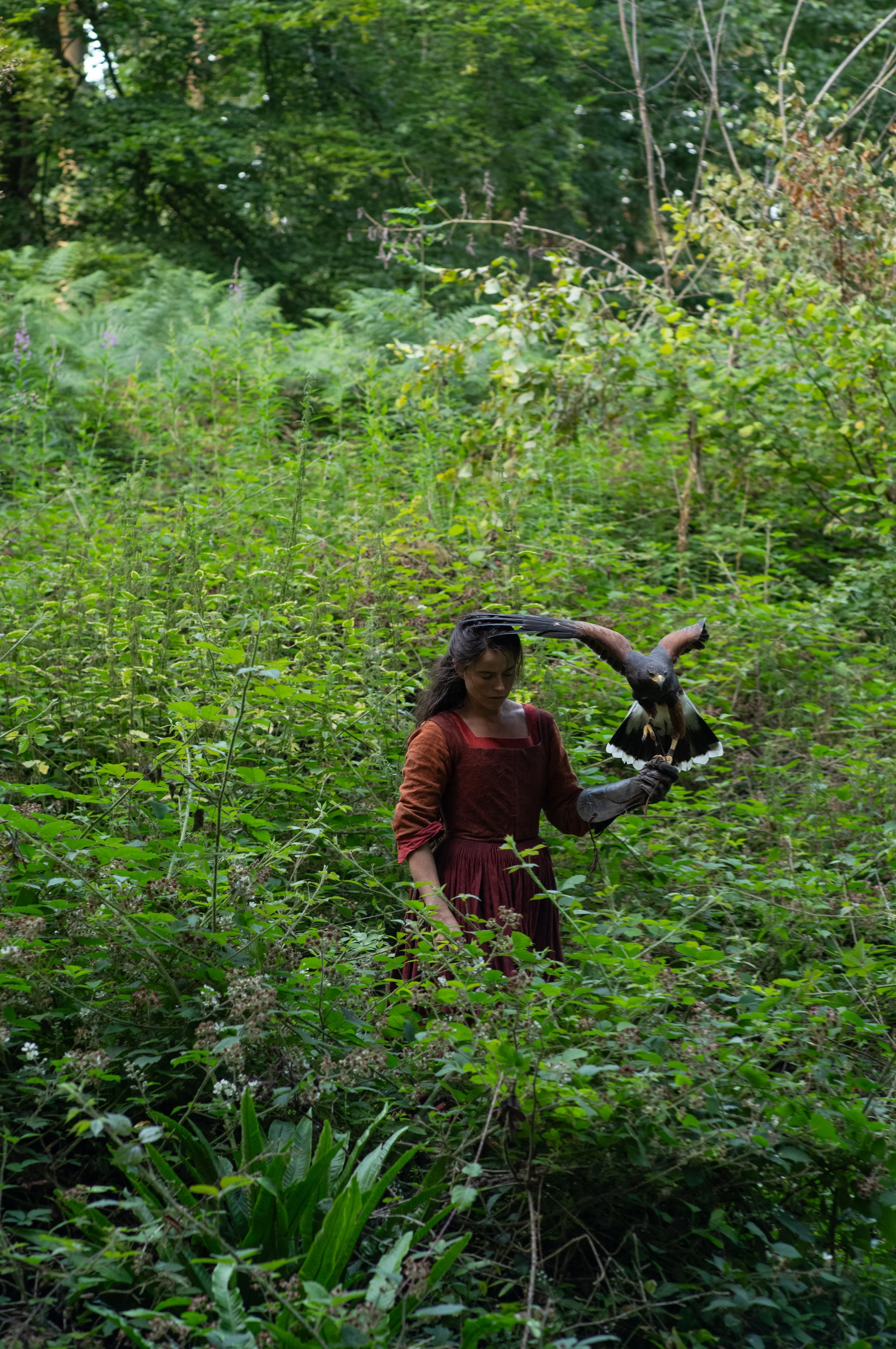
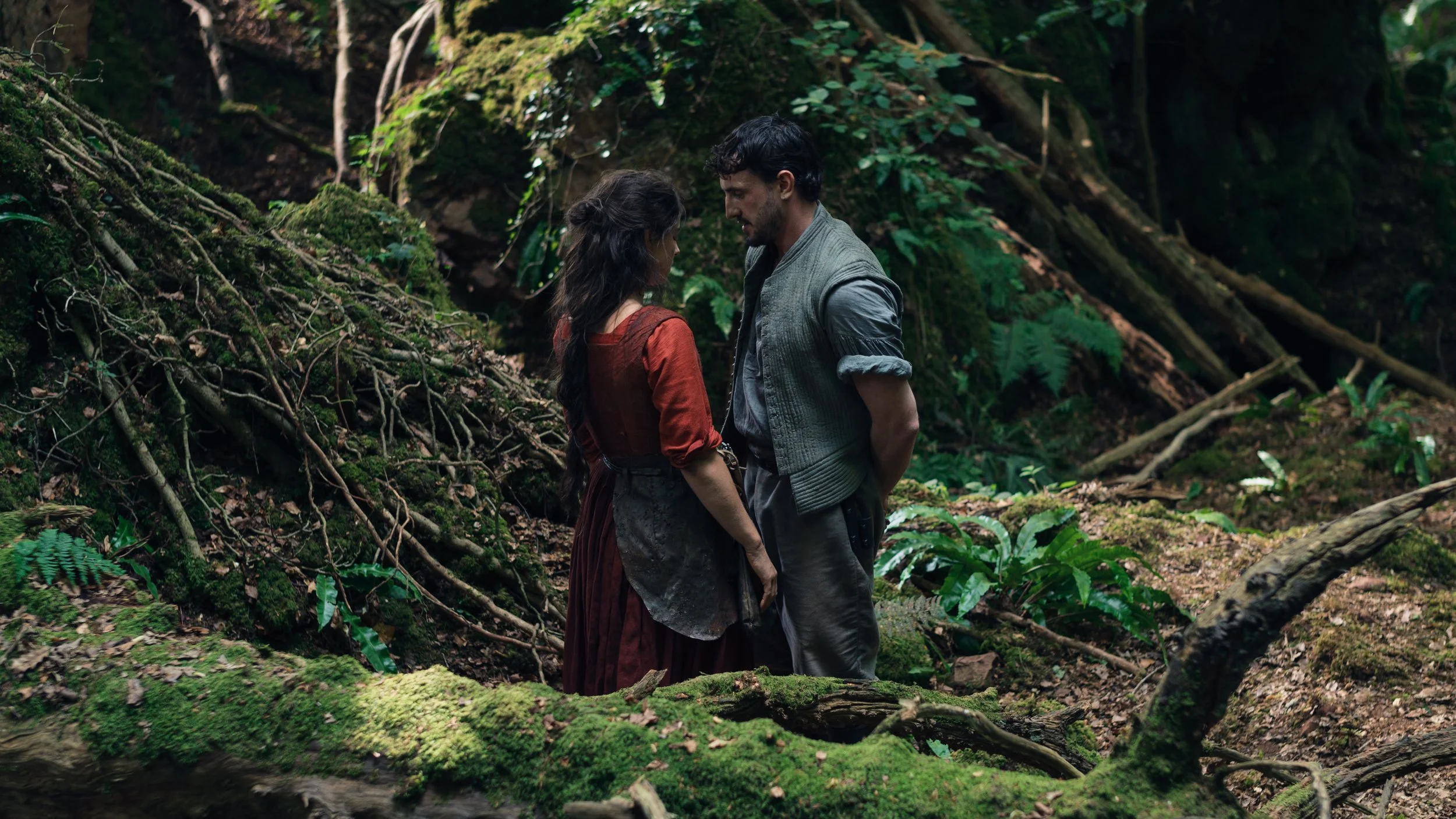
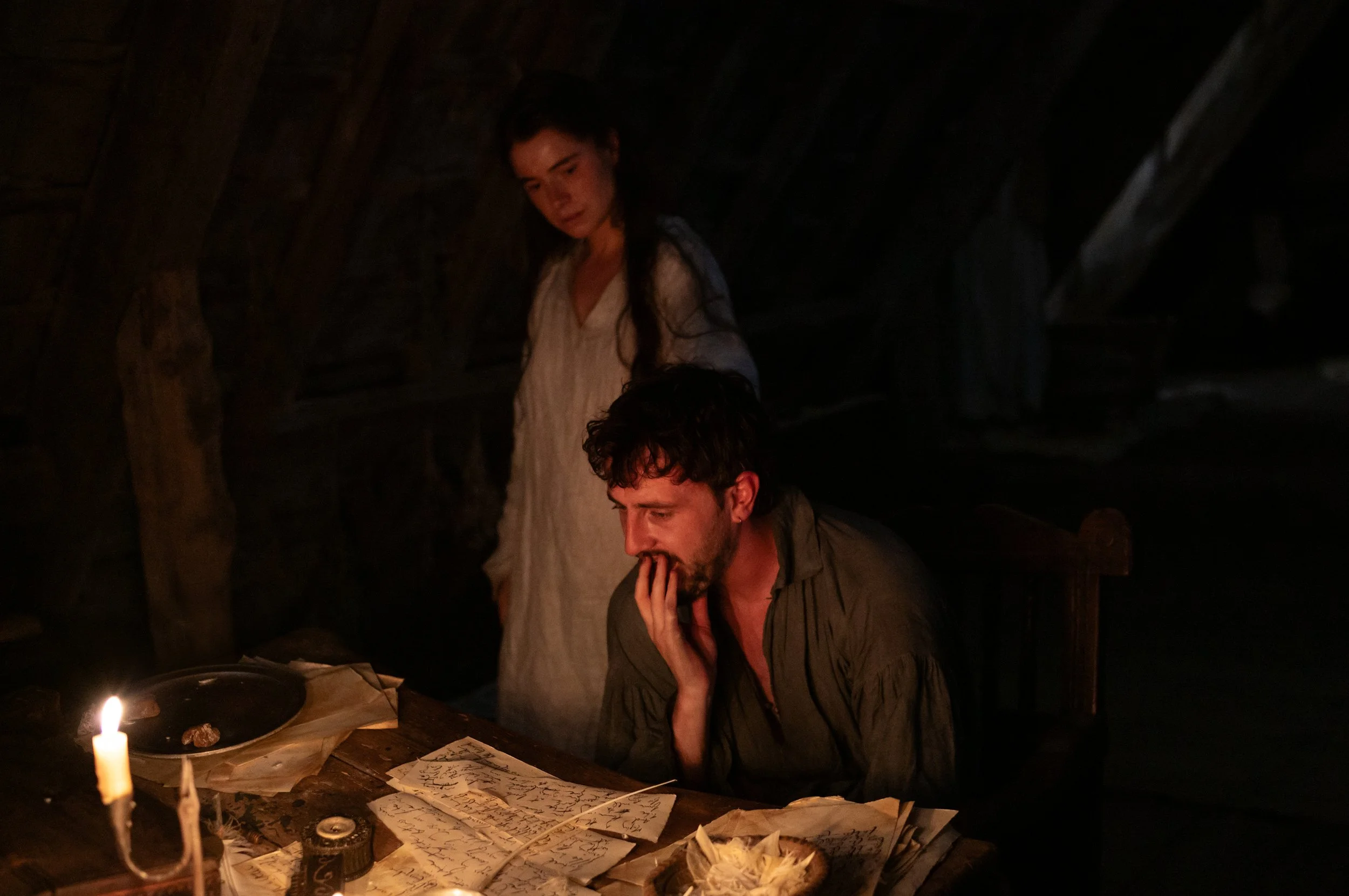
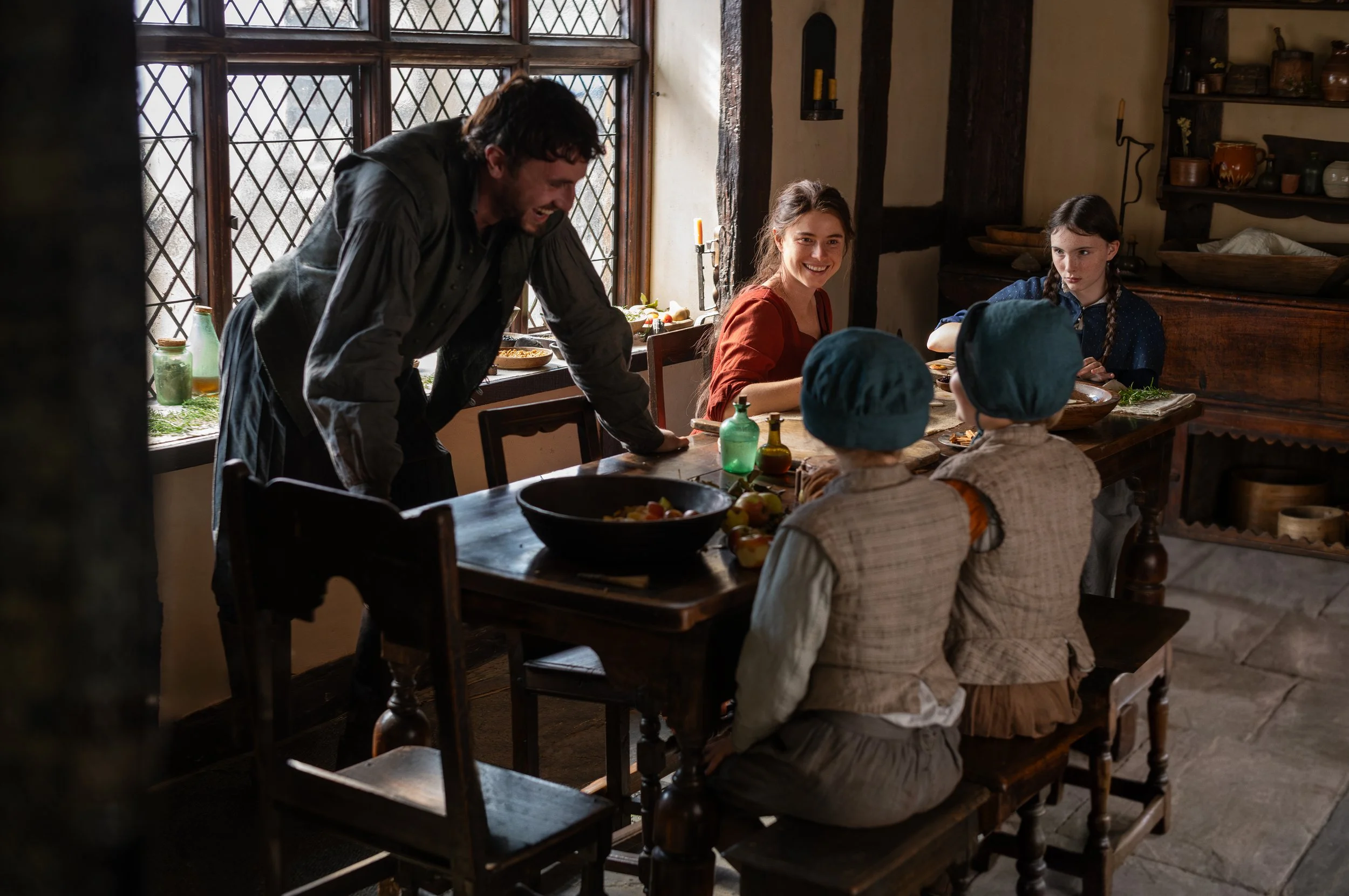
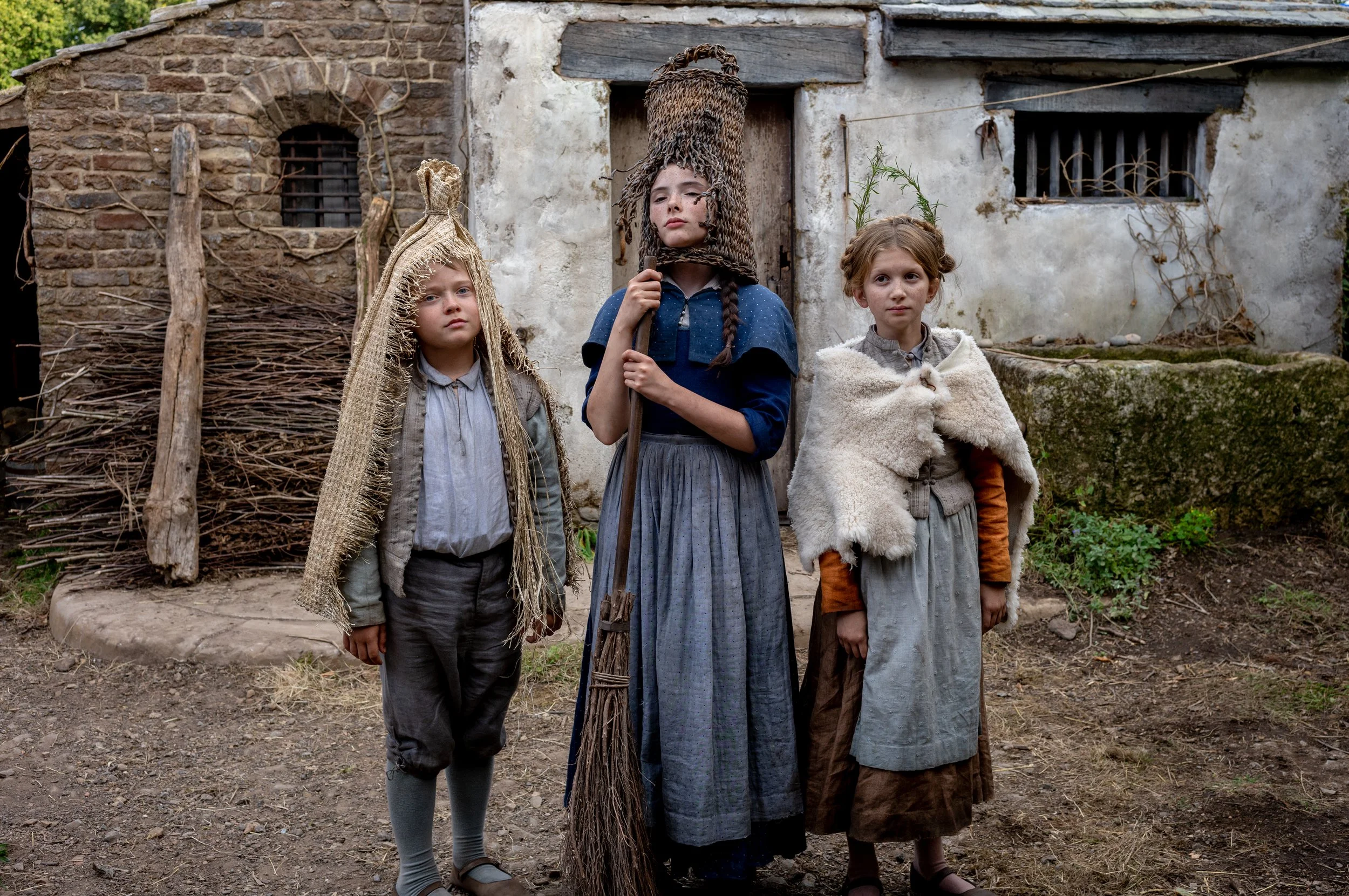

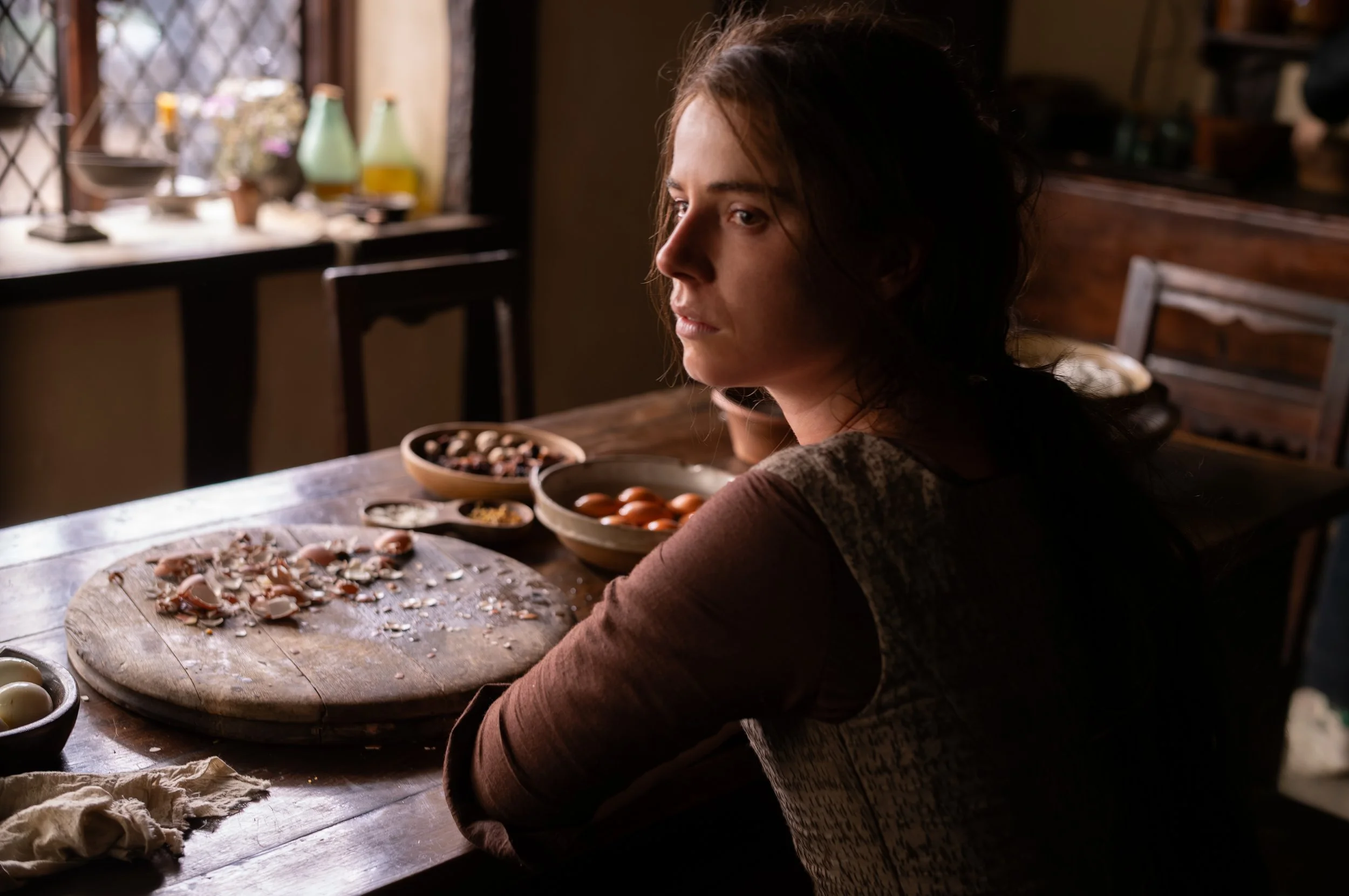
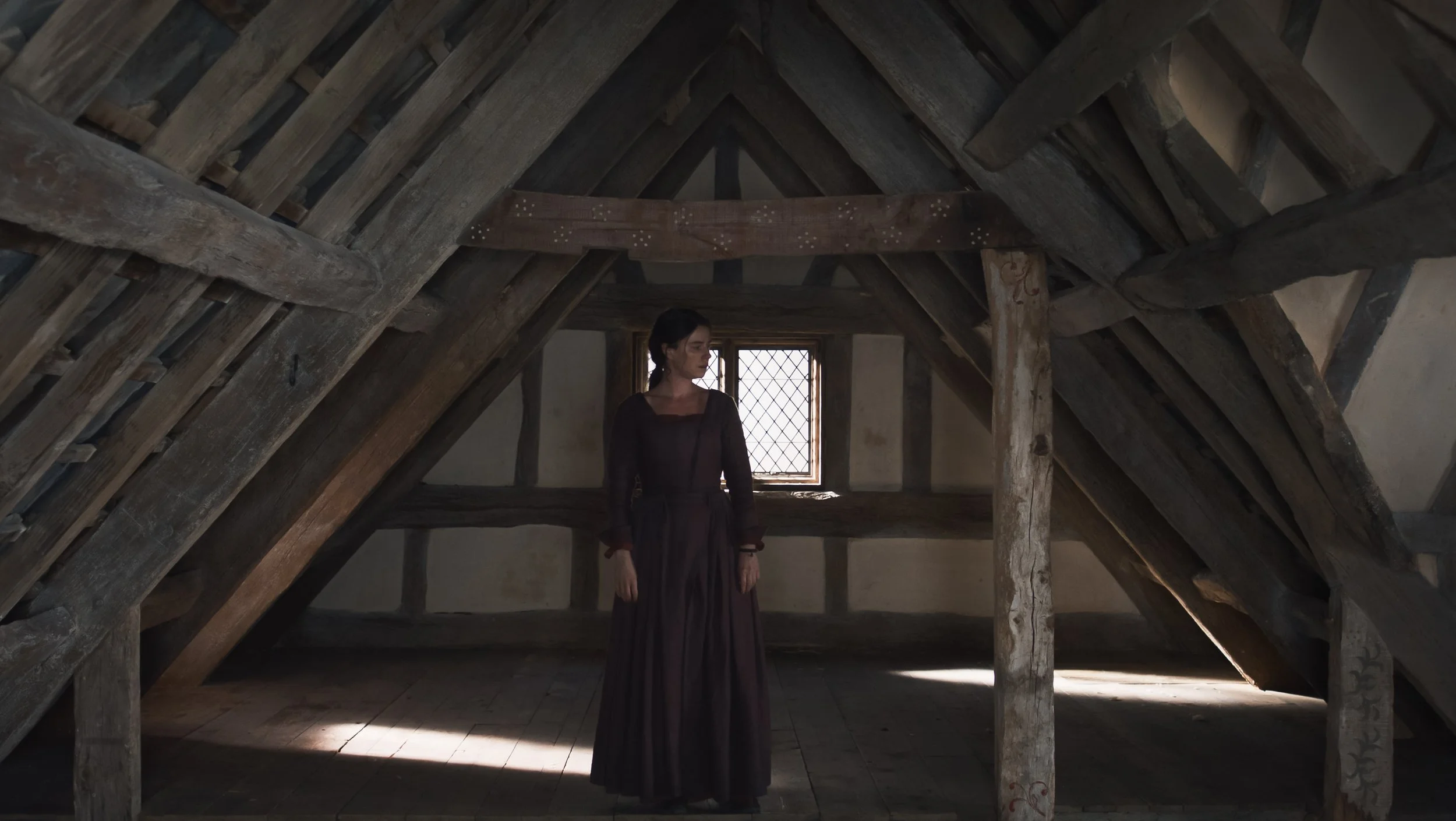
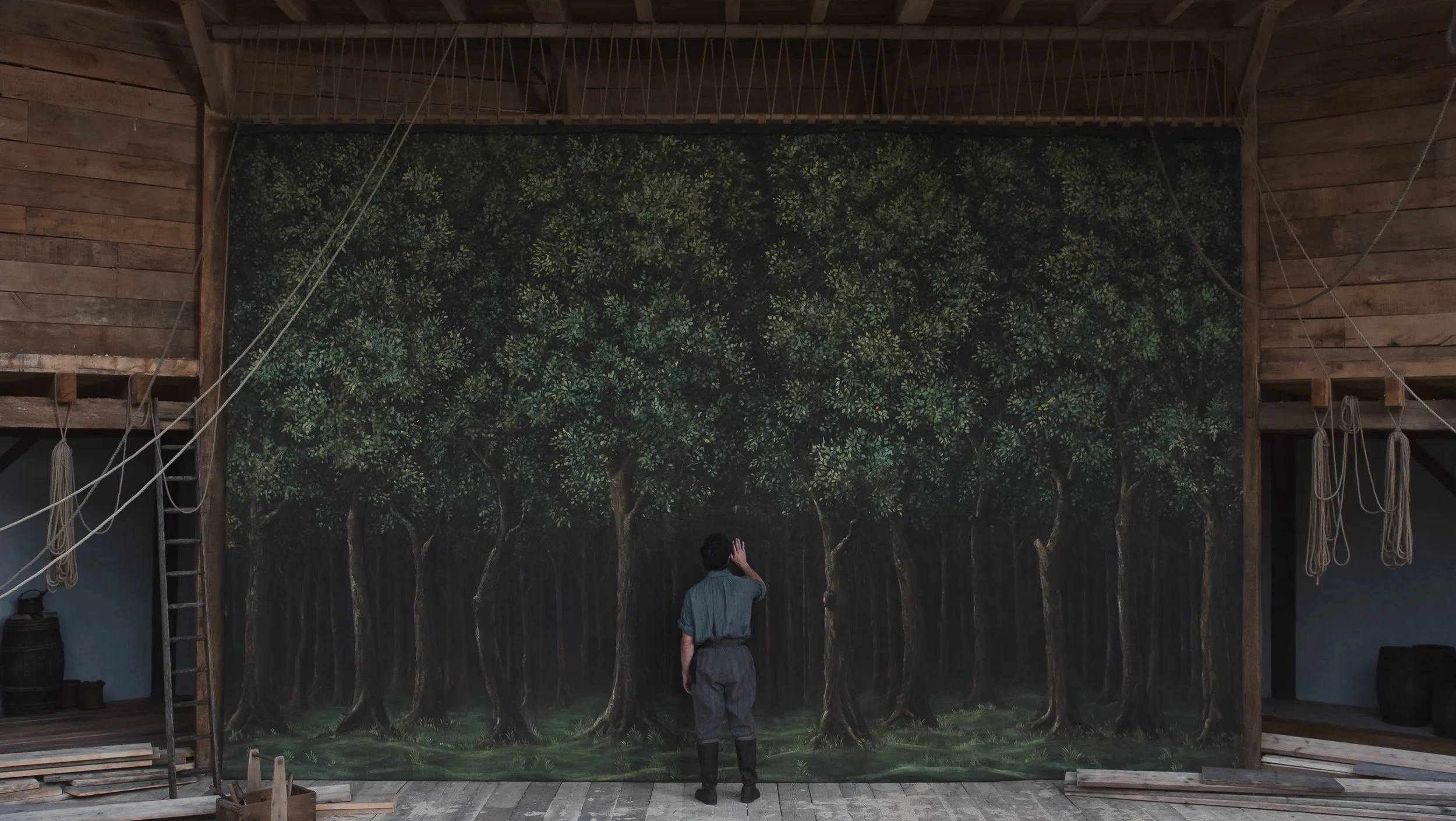
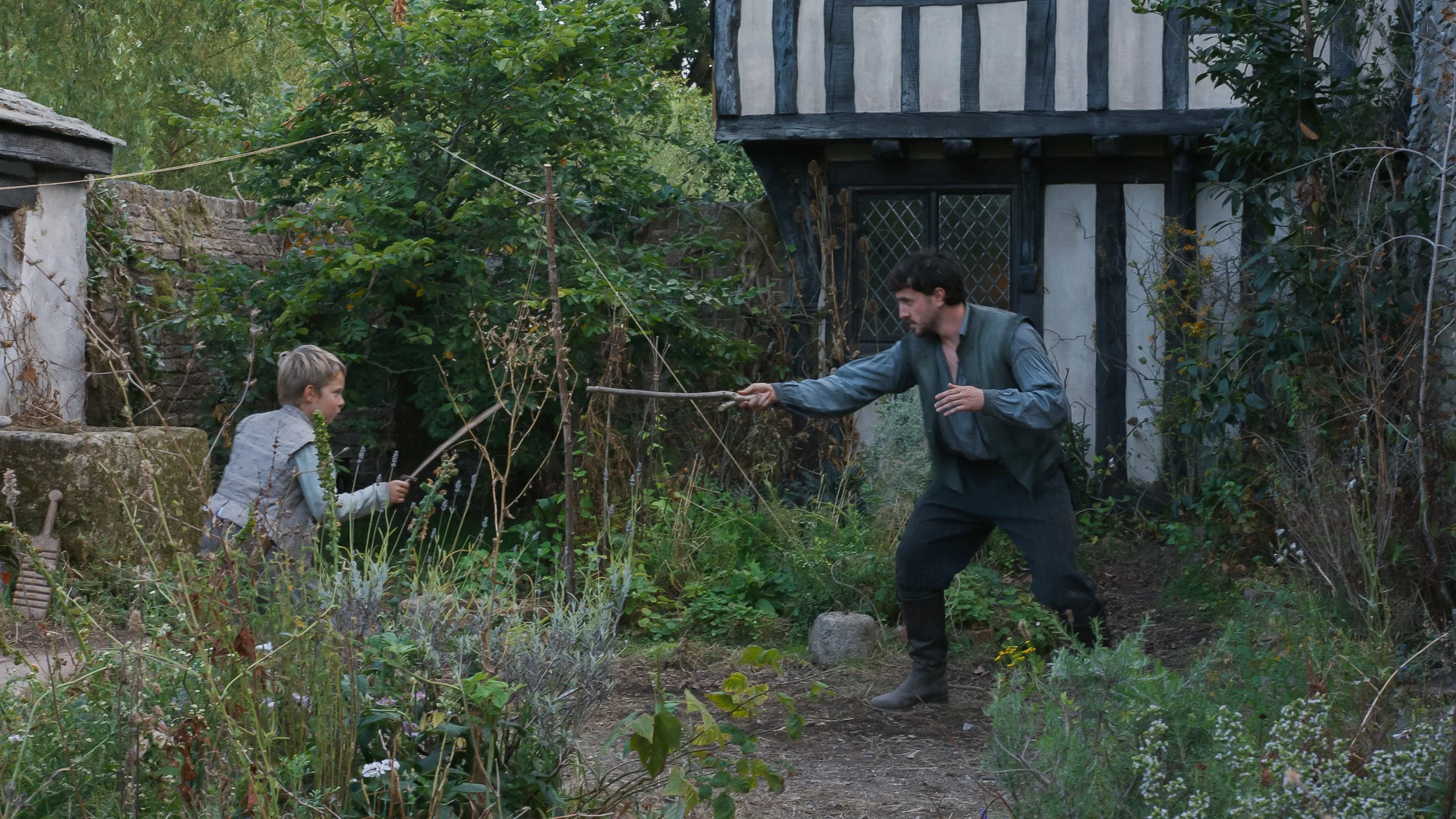
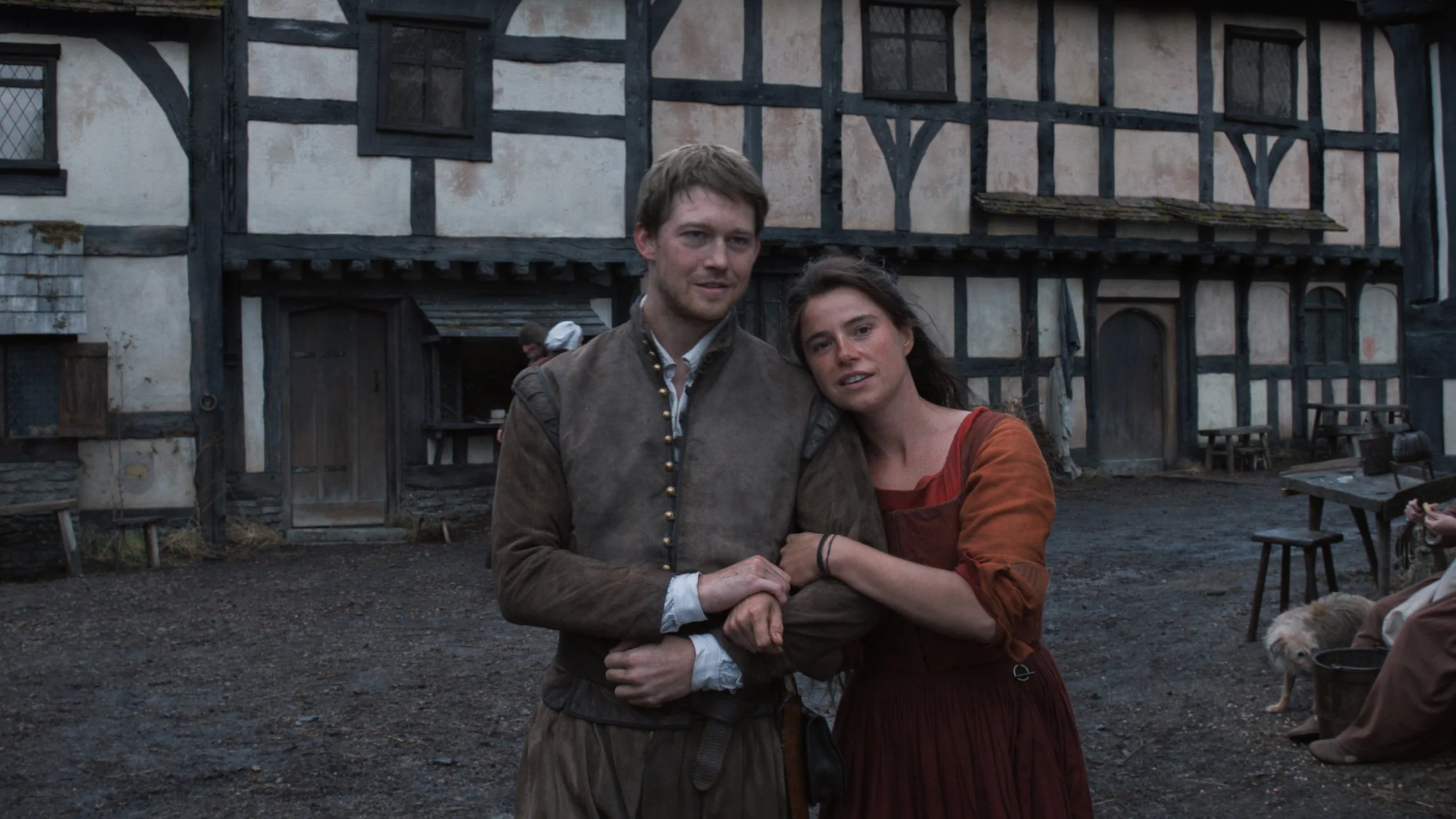
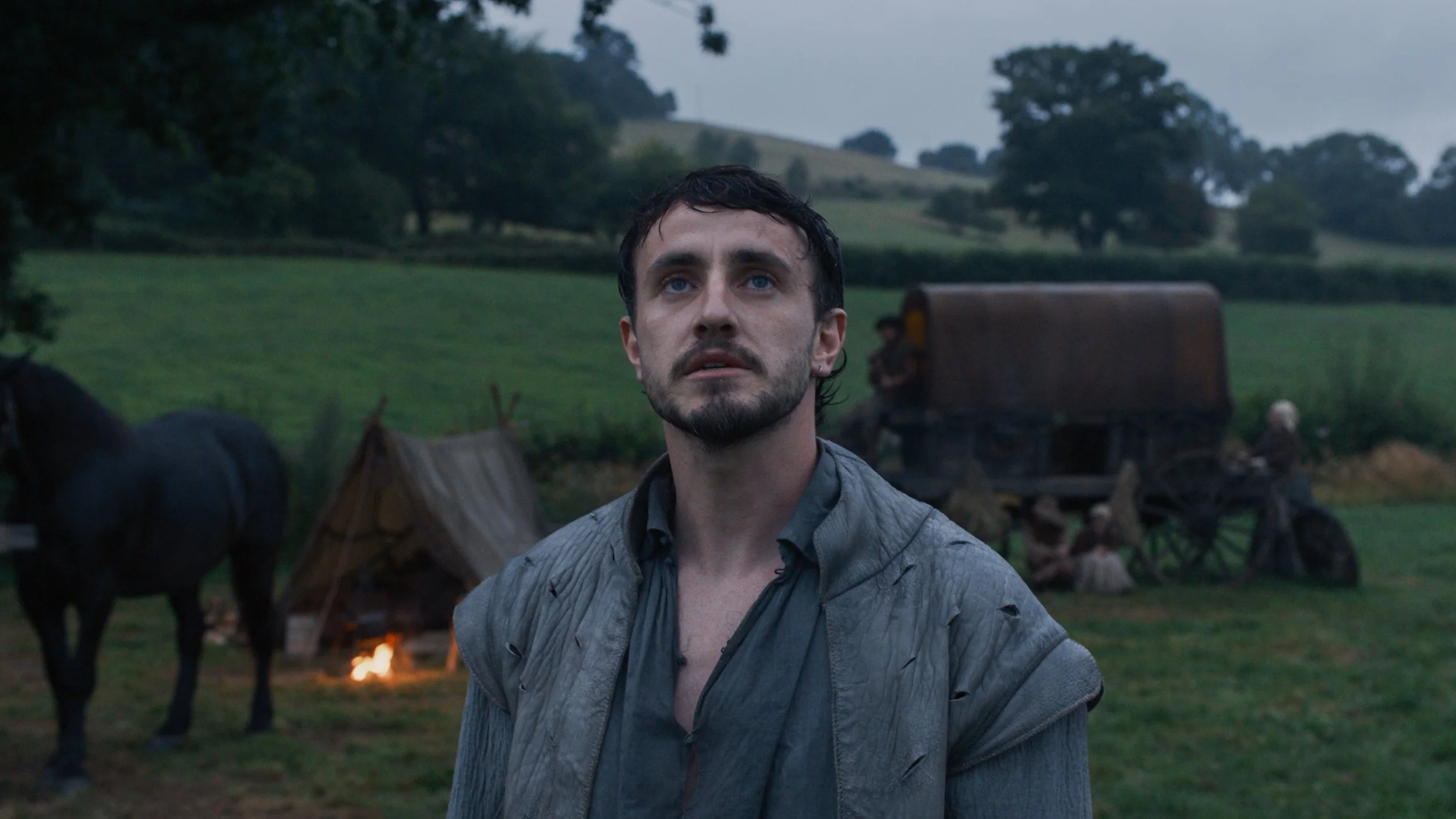
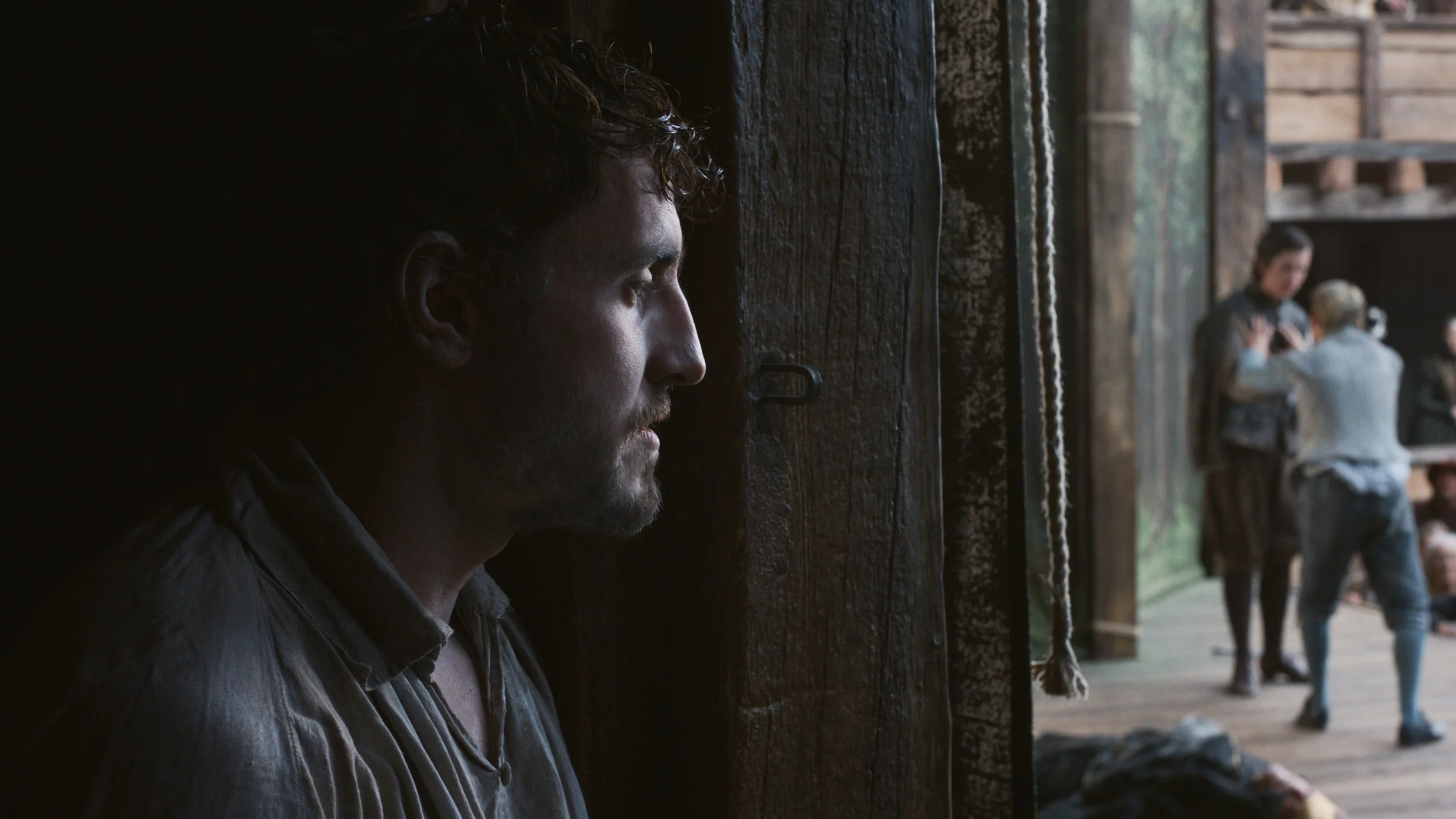
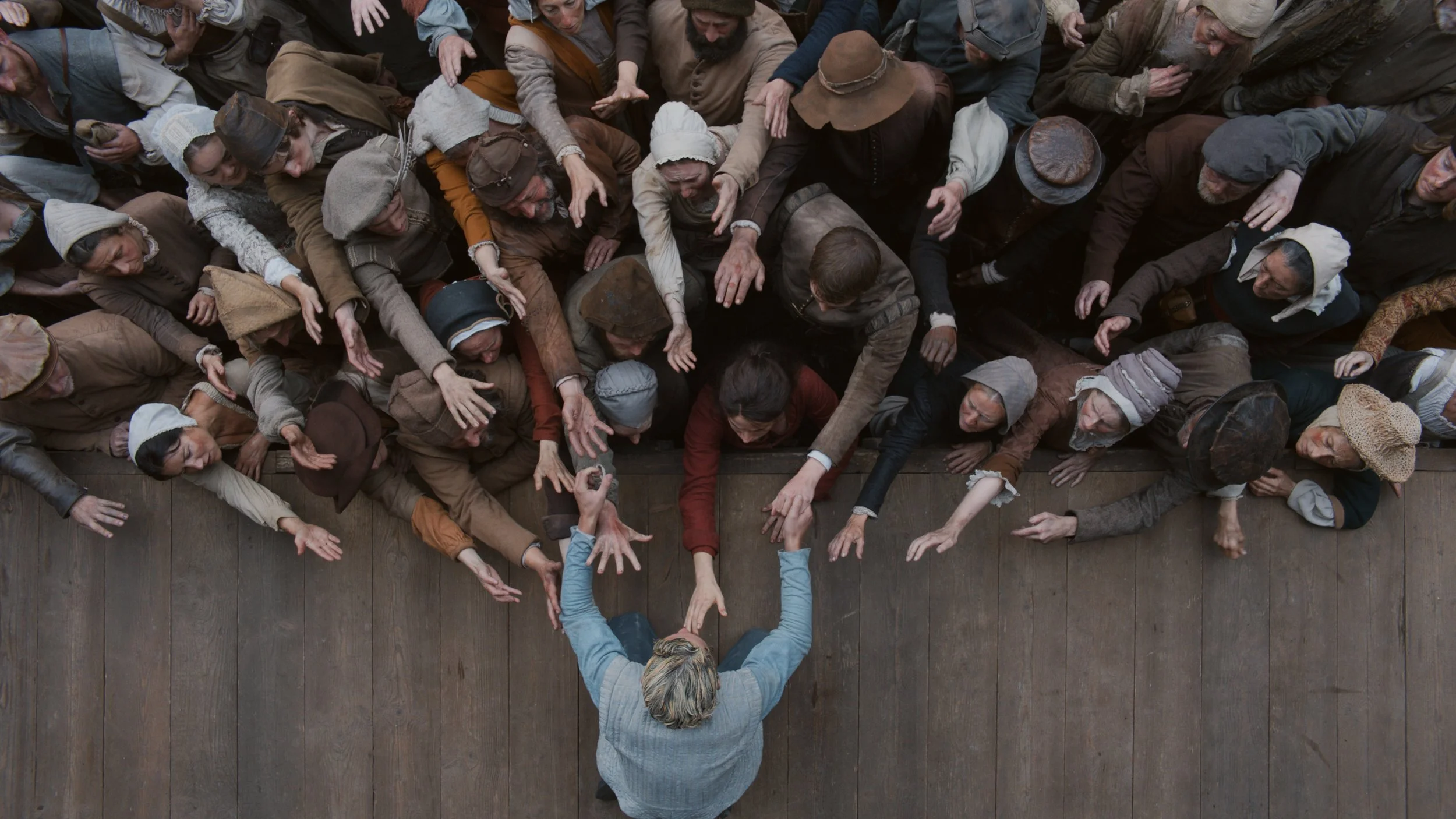
Łukasz Żal’s camerawork is quietly stunning in its best moments. The opening shot, featuring treetops as light spills through before panning down to Agnes in a fetal position inside the tree roots, is an image that continues to stick with me. An equally striking shot shows Will at the window, with the forest reflected in the glass. Finally, the camera panning away from Judith and Hamnet felt like a documentary, where the camera operator gives its subjects a moment of privacy out of respect for what’s about to happen.
These three examples exemplify Hamnet’s relationship with the world around it.Żal’s approach is one of extreme reverence for nature, our natural need for reflection, and his restraint in knowing when to look away.
Production Design
Fiona Crombie’s production design renders Stratford and London with enough detail to feel like people actually live there rather than being reconstructed centuries later for a movie about grief. For starters, every house feels like it’s been lived in for decades. There are trinkets strewn about, soot in fireplaces, and general wear and tear. Beyond the interiors, the color contrast tells me that while Agnes seems to be suffering internally in her private moments, she's surrounded by so much beauty that it seems at odds with her emotions. On the flip side, London is a perfect representation of Will. People are dying in the streets of London, stray dogs wander around, mud is strewn everywhere, and a black-and-grey color palette envelops Will's surroundings.
Initially, there are a few moments that gave me pause, as certain surfaces and structures catch the light in ways that prompt the question of what was built and what was a set extension. However, those concerns were alleviated upon a rewatch. I’m not quite sure if this was a result of post-production work for the Peacock/home media release or a byproduct of having less visual information on consumer hardware. Either way, I’m glad those concerns were alleviated.
Costume Design
Malgosia Turzanska’s costume design feels competent and period-appropriate, but not among the film’s strongest elements. The nominations it’s received feel generous relative to what’s onscreen.
The costumes carry the natural dirt and grime that Agnes would have after being outdoors all the time, while Will’s feel cobbled together from spare leather that his glover father likely hand-stitched together. These costumes tell their own story about Will, Agnes, and the people around them.
Wrap-Up
Hamnet is a film that you should not miss. If there’s anything you take away from my review, I want it to be to seek this film out immediately. It is a film that explores grief in a way that feels like you’re keeping your loved ones alive a little bit longer. I felt the memory of my dad watching a movie with me. I miss those times every time I watch a movie like this one. Especially the post-movie conversations about what we thought of the movie, whether we should rent that director’s other films, and spending time together talking about an art form we both love.
While the film has its flaws, they do not weigh it down enough to become a burden on what Zhao, Mescal, O’Farrell, Richter, and Żal are trying to achieve. Buckley’s Oscar-winning performance alone is worth the price of admission, and the film’s central themes of grief, art, and the things we make to survive loss linger with me months after seeing it.
Rating: ★★★★★
Availability

Hamnet is streaming now on Peacock. You can also buy the film on Blu-ray, 4K Ultra HD Blu-ray, and digitally.